


Welcome to the confession booth.
This session was recorded at the first gathering of Stella Matutina, a philosophical R&D institute.
Why do people like Julia and Aishwarya keep walking away from existing institutions, like traditional academia or big tech, to build alternative ones instead? What is it they’re actually chasing?
In this episode, we explore tacit knowledge and why 96% of Nobel laureates share the same academic lineage, why grant cycles have started to look like venture pitch decks, why the SAFE changed startup culture and what the equivalent might look like for research philanthropy, and what it means to build from abundance instead of scarcity.
We talk about:
Why alternative institutions?
“What should exist but doesn’t”
Institutional design & what structures cultivate curiosity
Tacit knowledge & the phenomenology of discovery
Science as art/craft
Funding models & philanthropy’s “Cambrian explosion”
Why early-stage research shouldn’t be capital-driven
Catalytic capital, syndication/signaling
Infrastructure & open-source science
Need for foundational public-good infrastructure (Protein Data Bank)
AI’s role in scientific discovery
Wicked problems & complexity
Complexity, markets, and geopolitics as the three horizontals
Philosophy, language, and AI
Why philosophers/artists matter in tech now; blurring labels (organism/human/machine)
Coordination as the meta-problem
How to exit game theory scenarios
Reinventing institutions: the SAFE case study
Simple Agreement for Future Equity as a leverage-point innovation that normalized uncertainty tolerance
Our favourite lines from this episode include:
“The problems are smarter than us. All we do is listen.”
“Early-stage research cannot be close to capitalism: the moment an objective is involved, you lose curiosity.”
“To compete, we must collaborate.”
“If you want abundance in the world, you must act from abundance, not from scarcity.”
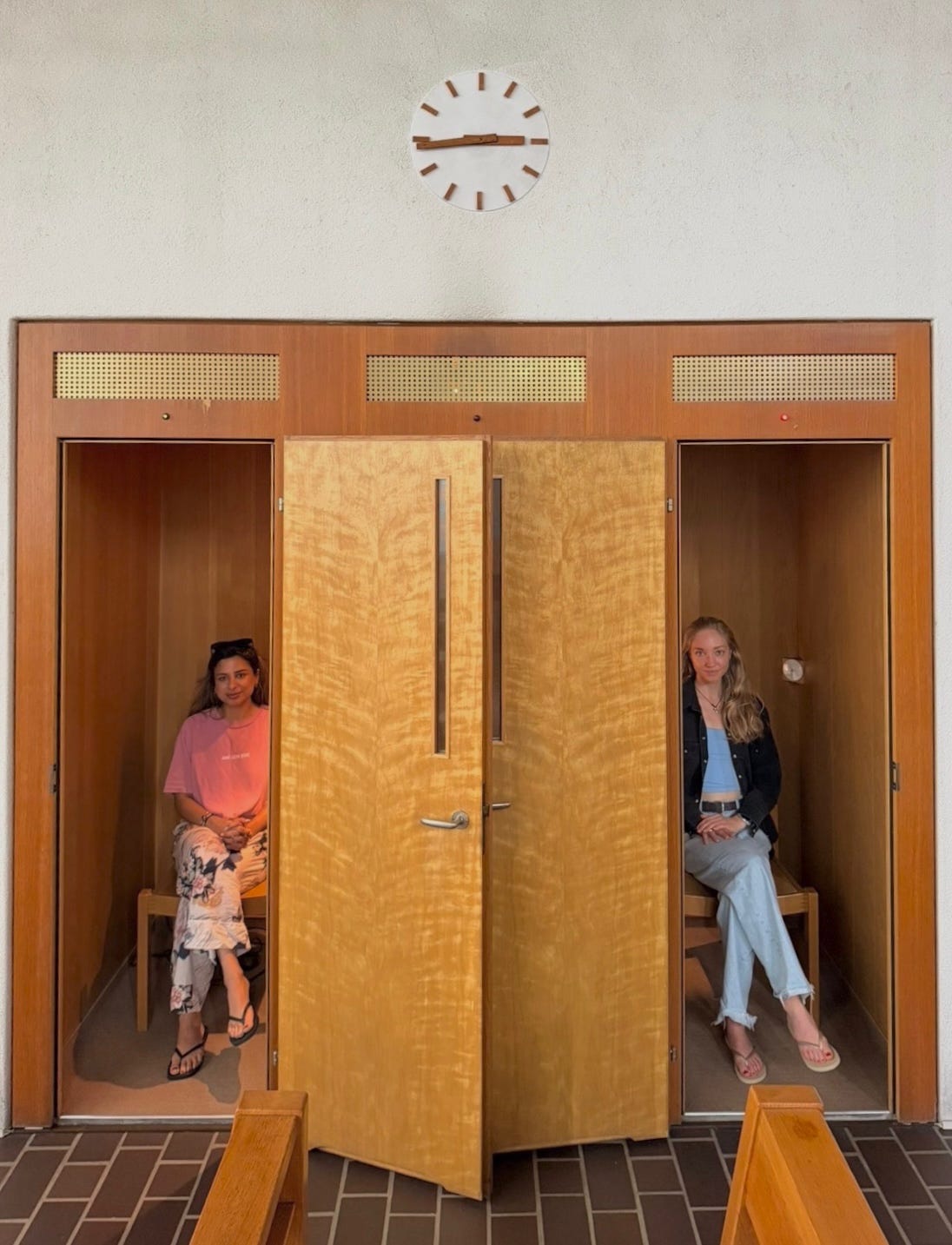
About Julia: Julia is interested in novel funding mechanisms for scientific discovery, biological intelligence, and institutional design. She works at Renaissance Philanthropy, whose mission is to fuel a 21st century renaissance by increasing the ambition of philanthropists, scientists, and innovators. She is also a director at Interact, a network of technologists at the intersection of philosophy, art, and tech. Julia formerly was a product manager at Meta and early climate startups.
If you want to go deeper, here are the references from this episode:
expeditions.earth: Analogue’s experimental fund in pursuit of interestingeness
secondrenaissance.now: a living archive of collective genius (“scenius”)
Books & essays:
Why Greatness Cannot Be Planned: The Myth of the Objective: Kenneth Stanley & Joel Lehman
“Idea Machines”: Nadia Asparouhova
Curious Minds: Dani Bassett & Perry Zurn
Breaking Through: Katalin Karikó
“Analogy as the Core of Cognition”: Douglas Hofstadter
Mount Analogue: René Daumal
Bhagavad Gita, chapter 2, verse 47
Thank you to Stella Matutina for giving us the opportunity to confide in your space.


