



Welcome to the confession booth.
Denise has written about monopoly power and the concentration of the American economy, helped newly wealthy tech founders think about giving, and now runs the labs program at the Long Now Foundation. We ask her what philanthropy looks like from someone who spent a decade on the pre-distributive questions instead.
In this episode, we explore what happens to someone psychologically when they suddenly have enough money to shape the world, why the desire to measure your own impact isn’t always the right instinct, and what gets missed by a ten-thousand-year framing.
We talk about:
Denise’s story
From selling macro research to hedge funds to co-authoring The Myth of Capitalism [1:42]
What happens when someone becomes newly wealthy?
Solicited and unsolicited wealth advice [4:31]
Why tech instincts don’t port neatly into social impact [5:24]
The ‘measurement problem’
Social impact bonds and the cottage industry that grew up around proving impact [6:23]
A new theory of giving beyond effective altruism [8:44]
Who carries the burden of legibility?
Uncertainty tolerance versus legibility posturing [11:08]
How to create containers people can see themselves in [13:39]
Power and antitrust
Untying the Gordian knot: separating the system from the individual who succeeded in it [14:50]
Why enforcement runs on one clock and acquisitions run on another [17:57]
Swarm coordination and its limits
Friction as a feature; healthy ossification [20:43]
Collaboration can be antisocial, and why sustainability can look like a cartel [23:11]
Trade-offs that don’t resolve [26:11]
The sticky structures of philanthropy
How social status affects donation habits [29:12]
The graveyard of common grant applications [30:02]
Time
Balancing a ten-thousand-year view against the decisions that need making now [32:21]
Not only being watched by others, but by the audience you carry inside [35:20]
The geometry of consciousness [37:26]
Our favorite lines from this episode include:
On the best case for antitrust reform:
“Even when you have what you would consider all the right things in place — the most powerful nation in the world with a president who is amenable to your agenda, the right people in the right set of agencies, a popular movement that’s emboldening politicians across the aisle to take this seriously — it’s still just very, very hard to get things across the line. It takes forever. You’re outgunned in many ways.”
On difficult tradeoffs in environmental policy:
“What’s a regenerative farm? Do we want all the cows to be grazing and going about on the land? If so, you would actually have to deforest a huge swath of land to be able to give cows more free range.”
On the relationship between wealth status and donation type:
“The more that you move up on the income spectrum, the less you tend to give to basic needs… as you get wealthier, you tend to give to education and arts, because it’s a status.”
On the limits of moving fast:
“Not all problems need swarm coordination. Some of them need long-term maintenance that’s really boring, over many decades and many centuries.”
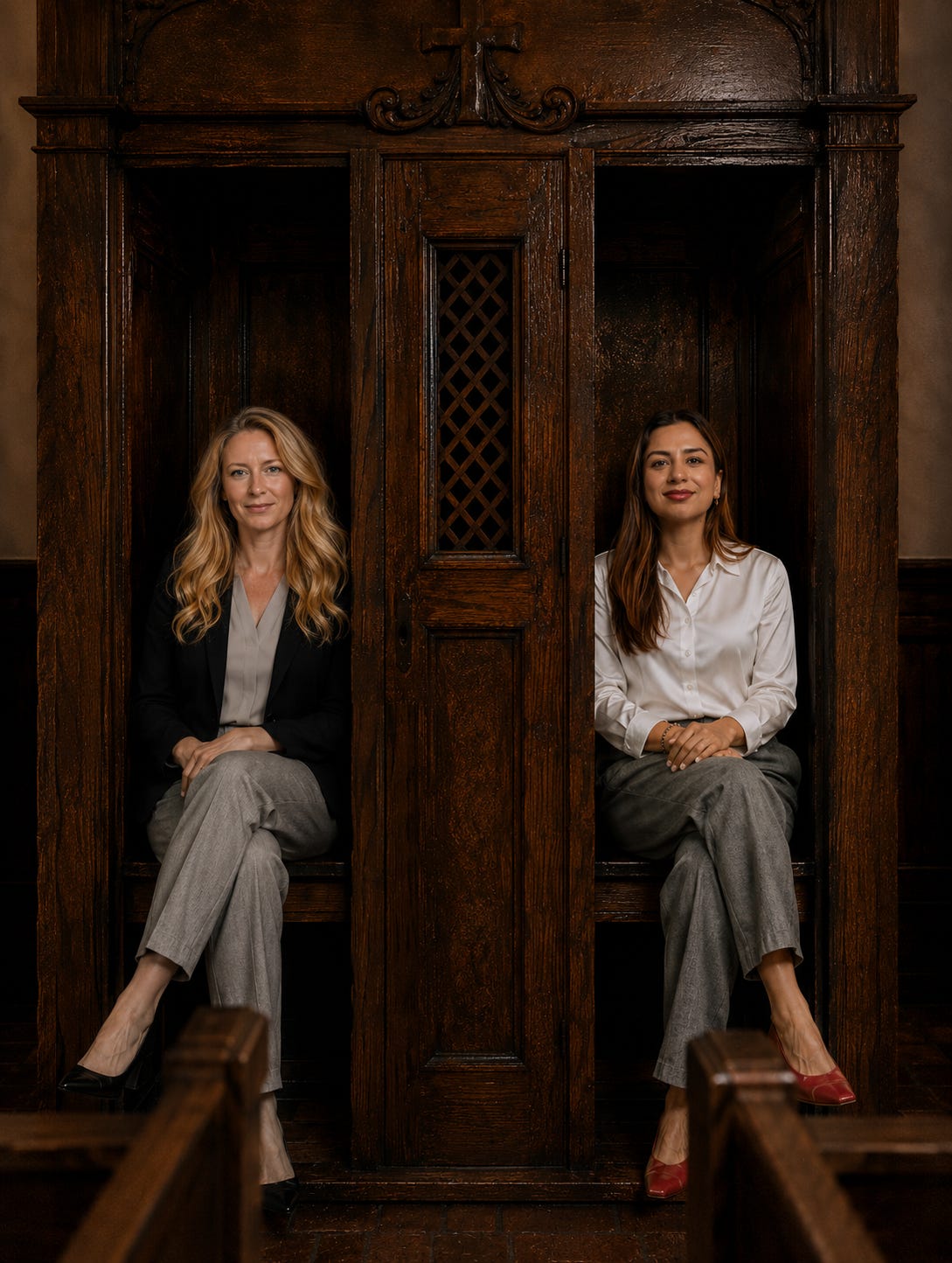
About Denise: Denise Hearn is Director of Strategic Initiatives at The Long Now Foundation. She founded Long Now Labs to build cross-disciplinary collaborations that produce tools and frameworks for long-term governance. Denise has spent the last decade building coalitions to reshape economic rules and thinking: she founded the Antitrust & Sustainability initiative at Columbia University’s Center on Sustainable Investment, and served as Advisory Board Chair of The Predistribution Initiative, which reimagines investment structures to address inequality, biodiversity loss, and climate change. She is co-author of The Myth of Capitalism (an FT best book of 2018) and The Big Fix, and her writing has been translated into 12 languages. She is a Fellow at the Berggruen Institute, where she researches planetary data governance.
If you want to go deeper, here are the references from this episode:
Books, articles & essays:
The Myth of Capitalism: Monopolies and the Death of Competition: Denise Hearn & Jonathan Tepper [0:24]
The Big Fix: Denise Hearn & Vass Bednar [0:33]
The Unaccountability Machine: Dan Davies, on accountability sinks and why big systems produce outcomes nobody chose [14:50]
“Recommendations to Update the FTC & DOJ’s Guidelines for Collaborations Among Competitors”: Cynthia Hanawalt, Denise Hearn & Chloe Field; the guidelines exercise she describes at [23:52]: Columbia Law
“Antitrust and Sustainability: A Landscape Analysis”: Denise Hearn, Cynthia Hanawalt & Lisa Sachs, for the Antitrust & Sustainability initiative she founded at Columbia’s Center on Sustainable Investment [25:16]: CCSI
Embodied Economics: Denise’s newsletter, which examines the paradigms and meta-narratives that shape economic and financial systems. [28:20]
Just Giving: Why Philanthropy Is Failing Democracy and How It Can Do Better: Rob Reich, Princeton University Press [29:12]
“The Big Here and Long Now“: Brian Eno [32:21]
Concepts and projects mentioned:
Analogue’s Expeditions Fund [12:26]
The Long Now Foundation’s 10,000 Year Clock, the Rosetta Project, and Revive & Restore [31:15]
Bayo Akomolafe’s Long Now talk, “The Untimely,” and the companion series he ran with Long Now, hosted by Denise [33:17]
The 1884 International Meridian Conference [33:46] One correction from us: the Meridian conference set the basis for GMT, not UTC, which came decades later.
“The Geometry of Consciousness“: Dr. Nina Miolane, Director of the Geometric Intelligence Lab at UC Santa Barbara [37:26]
Elsewhere in this series:
Zac Hill on why the grant is still philanthropy’s default financial instrument: a companion to Denise’s point about the graveyard of common grant applications at [30:02]


