


Welcome to the confession booth.
Zac has designed games, run policy shops, and built nonprofits. He now runs a venture studio for civic moonshots. We ask him what philanthropy would look like if we designed it ourselves.
In this episode, we explore how to enter a problem you know nothing about, why beginner’s questions are worth more than they look, and when to stop paying attention and act.
We talk about:
Game design to policy design
From the Memphis Flyer to Magic: The Gathering to civic venture building [2:52]
When early-stage social initiatives get $100k, and asked for a miracle in return [5:22]
How to enter a problem you know nothing about
“Restrictions breed creativity” [6:58]
The structural bias toward launching another nonprofit [9:47]
Paying attention to time your action [17:05]
Why the grant is still the default instrument
The grant application is a product. For who? [18:39]
What grants can’t do: prizes, advance commitments, re-granting [21:20]
When one instrument dominates [22:52]
Do nonprofits actually want to solve their problem?
Institutional inertia and twenty years of adjacency [24:06]
When you succeed, there are incentives to catastrophize [27:35]
Bounded missions [28:29]
Metrics, trust, and taste
Should public trust be an impact metric? [29:25]
Remember: making a great burger doesn’t make you the CEO of McDonald’s [33:45]
The scale question
Scale of impact vs. scale of institution [36:17]
In impact work, your KPI should not be about organizational credit [38:55]
The politics of loud failure [40:36]
Mechanic-specific philanthropy
Funding good things that run at a permanent ten percent loss [45:19]
Look at what private capital makes possible, then look at what’s adjacent [48:28]
The most pathological incentive
“We don’t just provide capital, we provide capital and…” [49:56]
The embarrassment of looking passé [51:25]
What he wants you to know
Why he went from skeptical to very long on philanthropy [54:22]
The hiring mistake he’s made, and watched others make, over and over [56:24]
Our favourite lines from this episode include:
“If the problem is actually going away because you’re succeeding, you have an incentive to catastrophize about it. Actually, it isn’t solved yet. Actually, it’s worse than it seems.”
“Trust is arguably the defining variable of the legitimacy we have to coordinate action across society.”
“[In philanthropy] you get this massive risk aversion, due to social incentives, in a space that nominally has the highest risk tolerance of all.”
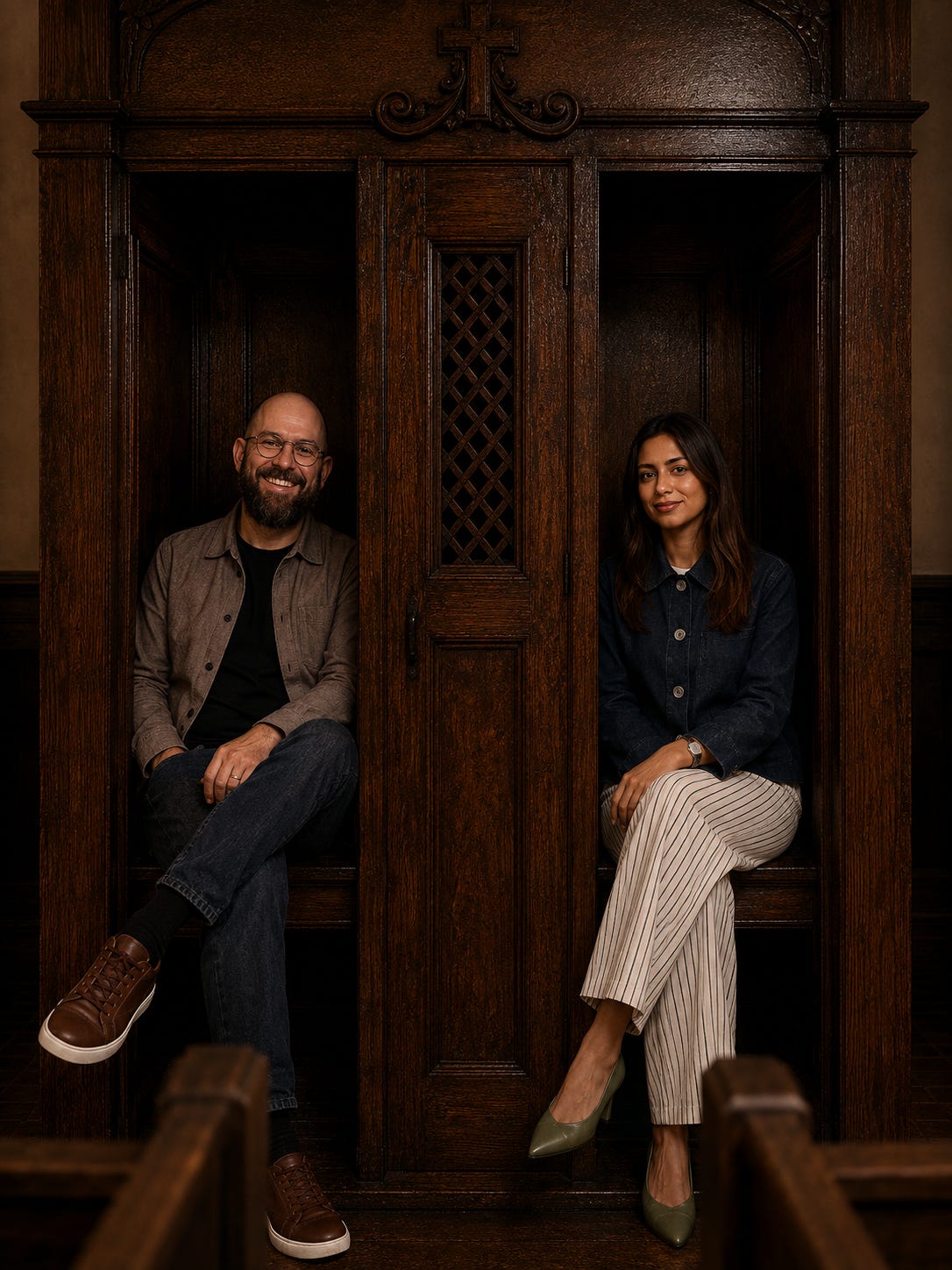
About Zac: Zac Hill is co-founder and President of the Office of American Possibilities, a sponsored project of Rockefeller Philanthropy Advisors and a venture studio for high-impact early-stage social and civic initiatives. He was previously a co-founder and Chief Operating Officer of The Future Project, a national youth development nonprofit. Before that he was a Lead Game Designer for Magic: The Gathering, winning an Origins Award for Magic: Innistrad, and Lead Gameplay Designer for Magic: Duels, named one of PCGamer’s “Top 100 Games of All Time” in 2012. Earlier in his career he was a policy analyst for the mayor of Memphis, an editorial intern for the Memphis Flyer, and a research affiliate at the MIT Game Lab. He has also taught freshman composition and public speaking, and has published analysis and criticism for the Stanford Social Innovation Review, The Believer, the Huffington Post, and DailyMTG.
If you want to go deeper, here are the references from this episode:
Books, articles & essays:
Why Greatness Cannot Be Planned: The Myth of the Objective — Kenneth Stanley & Joel Lehman [11:23]
The NSF’s $1.5 billion NOFO announcement on portfolio-driven grantmaking [40:36]
Elsewhere in this series:
Confessions of Philanthropy with Stuart Buck (Ex- Laura and John Arnold Foundation) was mentioned at [39:45], where Stuart explains why VC portfolio logic doesn’t apply to philanthropy


